
Tracing Former Owners of a Columbia County Property
Columbia County official records and custodian guidance
| Source | Years It Covers | Where Held | What It Shows |
|---|---|---|---|
| Columbia County official records and custodian guidance | Columbia County official records and custodian guidance | Columbia County official records and custodian guidance | Columbia County official records and custodian guidance |
| Columbia County official records and custodian guidance | Columbia County official records and custodian guidance | Columbia County official records and custodian guidance | Columbia County official records and custodian guidance |
| Columbia County official records and custodian guidance | Columbia County official records and custodian guidance | Columbia County official records and custodian guidance | Columbia County official records and custodian guidance |
| Columbia County official records and custodian guidance | Columbia County official records and custodian guidance | Columbia County official records and custodian guidance | Columbia County official records and custodian guidance |
Columbia County official records and custodian guidance
Walking the Columbia County Deed Chain Backward
Columbia County official records and custodian guidance
- Columbia County official records and custodian guidance
- Columbia County official records and custodian guidance
- Columbia County official records and custodian guidance
- Columbia County official records and custodian guidance
- Grantor / grantee
- Columbia County official records and custodian guidance
- Chain of title
- Columbia County official records and custodian guidance
- Legal description
- Columbia County official records and custodian guidance
How Far Back Columbia County Ownership Records Go
Columbia County official records and custodian guidance
Lawful use. Columbia County official records and custodian guidance
Bridge Columbia County Former Owners Beyond SearchIQS
No verified starting year exists for the online index. Never invent an earliest deed. Carry the last known grantor, grantee, deed type, recording date, and book-page reference into the Clerk's index volumes, deed books, maps, or microfilm, and work the chain from there. Estate and referee deeds can require a court file. That file explains why the named grantor changed, and the State Archives pathfinder outlines how to carry older land-record research further.
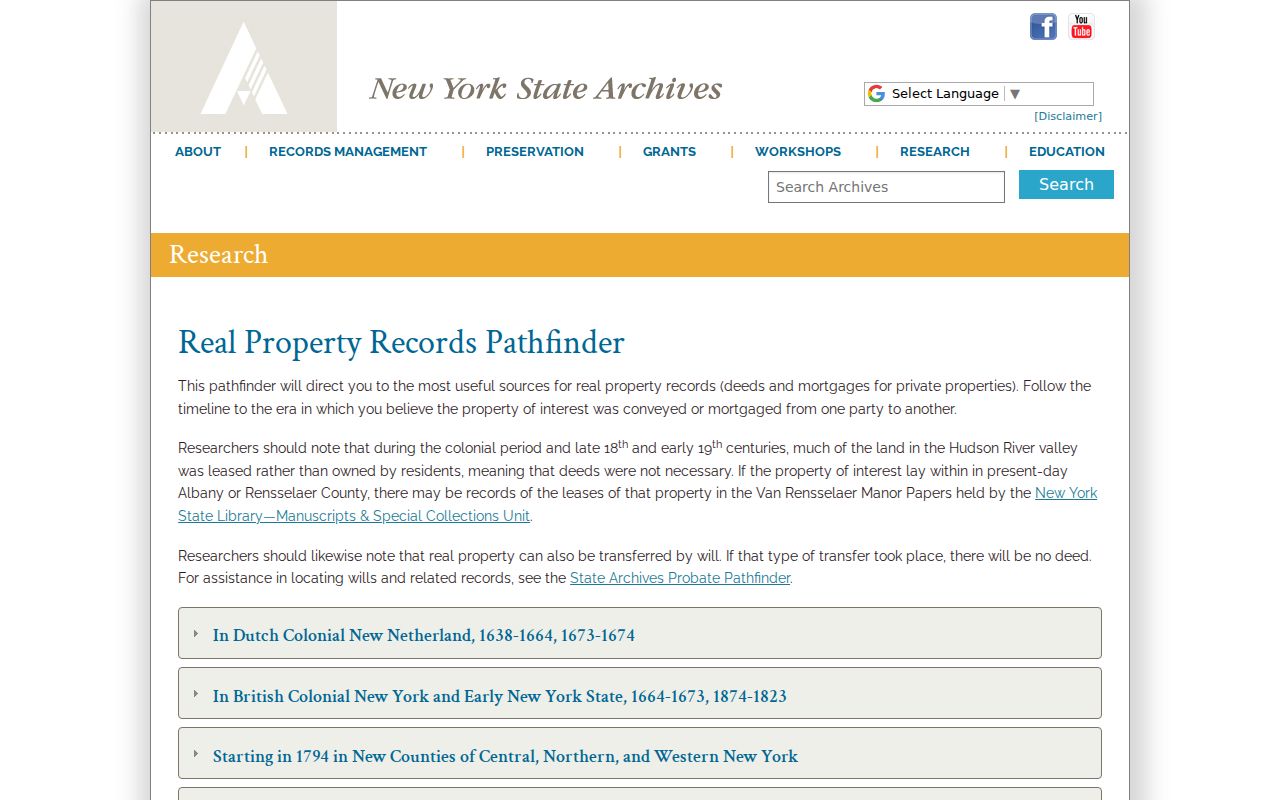
The guide helps locate context, but the county deed index controls the recorded chain.
Newspapers as Columbia County Ownership Clues
CCHS and the New York State Library both list newspaper runs for Columbia County. Those runs include the Columbia Republican and the Hudson Gazette. Old papers hold real clues. Sale notices, estate notices, and local descriptions can tie an old place name to a party across decades. Every clue must return to a recorded instrument. The State Library county newspaper list documents the repositories and date runs that make the search practical.
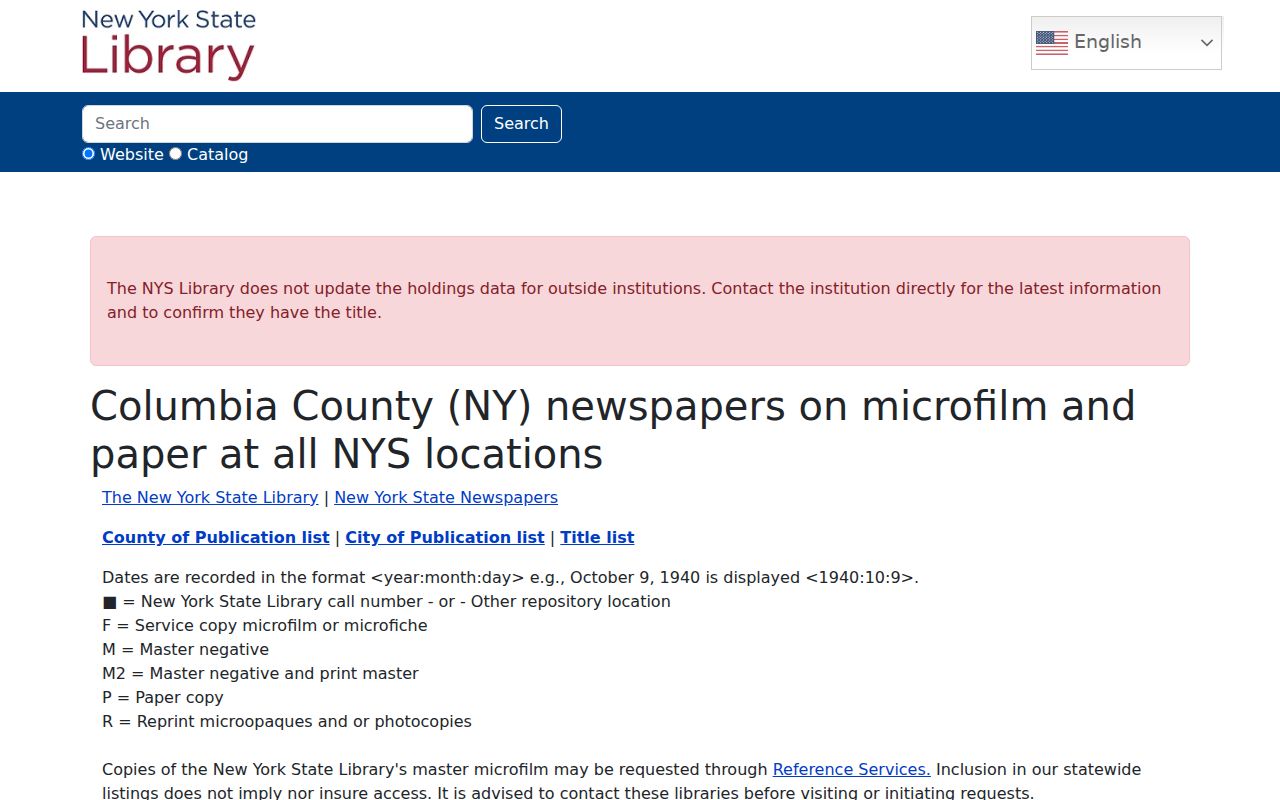
The county newspaper list supports a targeted date-and-title search.
Build a Columbia County Former-Owner Timeline
Build the backward chain as a table. Each row should hold one recorded Columbia County transfer. Start with the newest deed that matches the parcel, then move from its grantor to the deed where that same party acquired the land. Names alone are not enough, because one person can own more than one county parcel, so capture enough detail to re-create every search.
| Transfer Date | Grantor to Grantee | Deed Type | Book, Page, or Instrument |
|---|---|---|---|
| Newest verified date | Prior holder to current grantee | As recorded | Exact Clerk reference |
| Prior verified date | Earlier holder to later grantor | As recorded | Exact Clerk reference |
| Earlier verified date | Continue only after parcel match | As recorded | Book, page, map, or instrument |
Add the legal description, SBL or map clue, source URL or volume, and a confidence note to the working file. Label each transfer date. A signing date and a recording date are different facts, so never treat one as the other when both are known.
Search Columbia County Grantors and Grantees Backward
A grantor conveys the interest. A grantee receives it. In a backward search, the grantee on the current deed is the starting owner. The grantor becomes the prior-owner candidate. Search that grantor as a grantee. This shows how the person or entity acquired the same parcel. Repeat the step only when the legal description, municipality, map, acreage, or prior reference confirms the match.
- Open the current matching deed and record every index field.
- Search its grantor as a grantee during an earlier date range.
- Carry initials, suffixes, married names, and entity variants.
- Compare the description and prior-deed reference.
- Log the verified link or preserve the point where the chain stops.
A reverse index eases grantee searches. Ask the Clerk which arrangement applies. Because the online starting year is not fixed here, no artificial cutoff is stated.
Estate Transfers in a Columbia County Owner Chain
Estate transfers complicate an owner chain. One deed can introduce at least three names: the decedent, the fiduciary, and a beneficiary or purchaser. The roles blur easily. An older assessment roll may still name the decedent, a Surrogate file names the executor or administrator, and the deed shows the fiduciary conveying the real property. Keep each role and date separate. Use WebSurrogate or the Surrogate's Court access route to identify the estate file and the fiduciary's authority where available. Then locate the recorded deed itself. A death certificate or obituary fixes chronology only. A will may describe intent, yet the instrument and the estate process must be read together. Trustee and referee deeds call for the same discipline, since the named signer acts in a stated legal capacity.
Chain terms. A grantor gives the recorded interest; a grantee receives it. Chain of title is the sequence. A reverse index searches grantees, and a quitclaim transfers the grantor's interest without the assurances tied to other deed forms.
Older Columbia County Addresses and Place Names
The oldest deed may lack a street number. Rural descriptions lean on context. They name farms, roads, creeks, landings, patents, or adjacent owners instead of a modern address. Hudson descriptions can depend on the street grid or a former number. Translate those clues with archival material. Then return to the Clerk record.
The Hudson History Room holds city directories from 1851 forward and material connecting original and current numbers in 1888-89. CCHS adds newspapers, family files, genealogies, and cemetery and church transcriptions. Municipal historians and New York State Library newspaper holdings can narrow a name and period. None is a substitute for a deed. Record the archival citation beside the clue and the separate Clerk citation beside the transfer it helped locate.
Know Where a Columbia County Chain Stops
A responsible chain history preserves its uncertainty. Stop when the parcel match fails, the needed index is unavailable, a name resists separation, or a missing instrument breaks the sequence. Then write down what you know. Log the last verified deed, attempted names, years searched, portal results, and the next custodian. That record stops repeated unsupported leaps.
A targeted Clerk request can name the grantor, grantee, approximate years, town or city, deed type, and last known book-page reference. For older gaps, ask about index volumes or microfilm. FOIL reaches identifiable existing records but does not obligate an office to assemble a complete abstract. Legal title work belongs with a title professional.