
How to Find Who Owns a Columbia County Property
Columbia County official records and custodian guidance
- Columbia County official records and custodian guidance
- Columbia County official records and custodian guidance]
- Columbia County official records and custodian guidance
- Columbia County official records and custodian guidance
Where Columbia County Owner Information Comes From
Columbia County official records and custodian guidance
| Source | Owner Info It Gives | Access |
|---|---|---|
| Assessor / tax roll | Columbia County official records and custodian guidance | Columbia County official records and custodian guidance |
| Recorder deed index | Columbia County official records and custodian guidance | Columbia County official records and custodian guidance |
| Secretary of State | Columbia County official records and custodian guidance | Columbia County official records and custodian guidance |
| GIS parcel viewer | Columbia County official records and custodian guidance | Columbia County official records and custodian guidance |
Columbia County official records and custodian guidance
What "Who Owns This Property" Cannot Tell You
Columbia County official records and custodian guidance
Lawful use. Columbia County official records and custodian guidance
Columbia County Property Owner Evidence
Start in PROS with an address search. Copy the SBL and the owner field exactly as shown. Then pull the newest deed the County Clerk has indexed for that parcel. Keep the situs and the tax mailing address separate. They often differ. A name match alone proves nothing about where someone lives. The assessment owner can trail a freshly recorded grantee in Columbia County property records.
The official PROS screen gives the address, SBL, owner, and Street Finder routes.
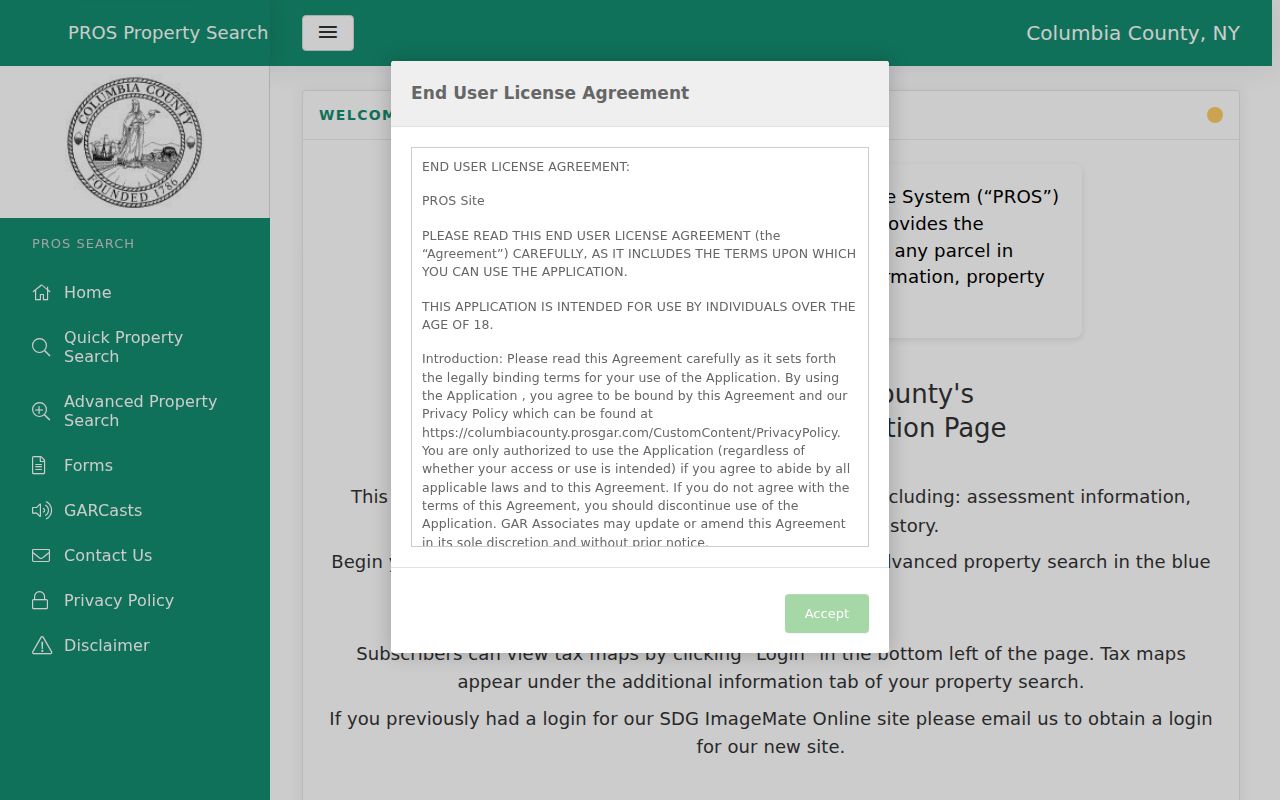
The image shows the correct first source before deed verification.
LLCs, Trusts, and Estates in Columbia County Ownership
Keep the vesting name whole. Preserve any fiduciary capacity attached to it. The New York Department of State entity database can reveal an LLC's status and filing history, though it never shows every beneficial owner and cannot prove title to a Columbia County parcel. A Surrogate or civil case file may explain an executor, administrator, trustee, or referee deed, so pair that authority with the recorded conveyance itself.
The eCourts menu links to WebCivil, WebSurrogate, and NYSCEF.
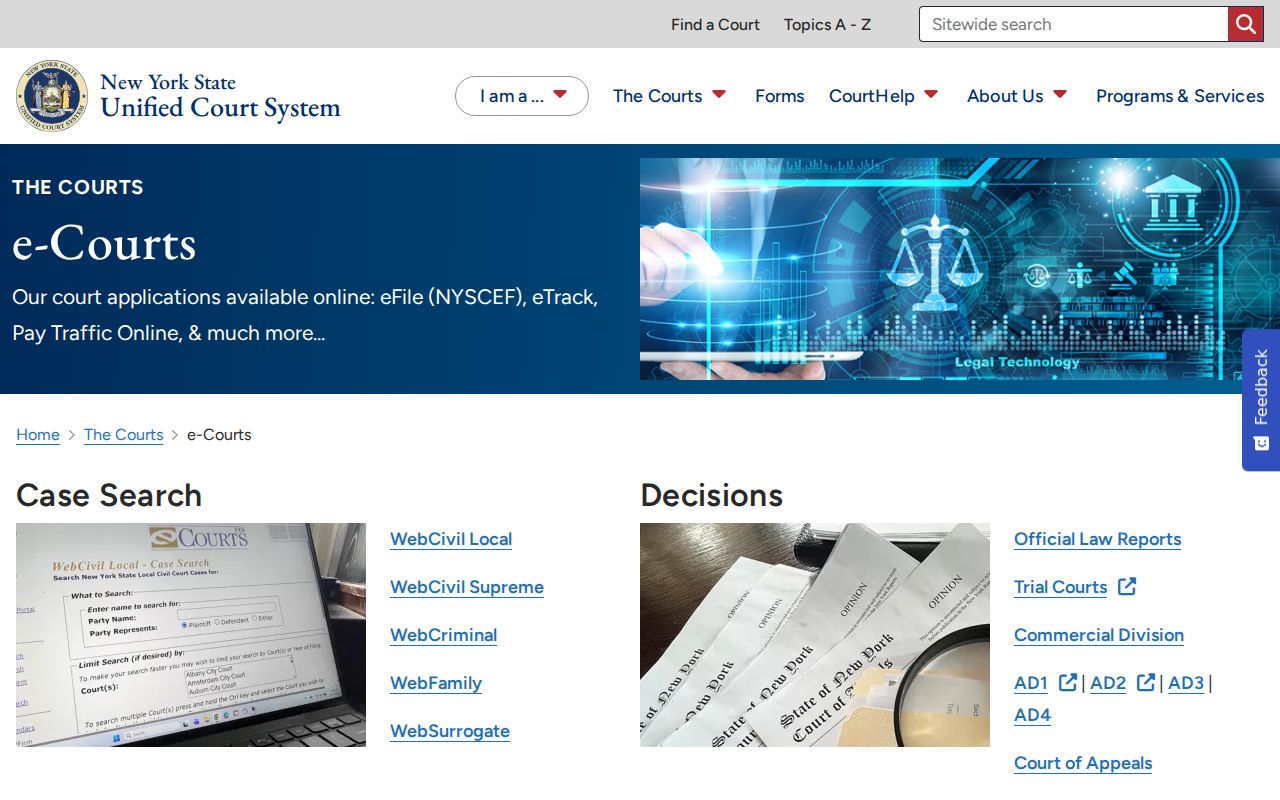
The court route explains authority; the Clerk's deed remains the recorded transfer.
Use the Columbia County Owner-Finding Method
The reliable path runs from parcel identity to a dated owner field. The final step is recorded proof. Enter the address in PROS and copy the SBL and municipality. Save the assessment owner text verbatim. Then search the County Clerk index. Look for the newest deed matching the same land in Columbia County. When sources disagree, report both dates and dig into the lag.
The address flags a candidate property, and the SBL ties assessment, tax, and map systems together. The PROS owner field provides the dated assessment lead. The latest matching deed gives the recorded grantee and legal description, while a court or entity record explains authority or a business name when the vesting requires it.
A postal address alone is weak evidence. Some Hudson mailing addresses actually sit outside the City of Hudson, which trips up many a Columbia County property search. Confirm the municipality in PROS and on the GIS map first. Only then pick your tax or permit sources.
Confirm the Columbia County Property Owner in the Deed
Search the exact owner field as grantee. Then search it again as grantor. Carry over every initial, suffix, punctuation mark, and fiduciary term. Open the newest plausible deed and compare the municipality, lot, acreage, map reference, legal description, SBL clue, and prior deed against one another. A same-name hit elsewhere in the county proves nothing.
Write down the grantor, grantee, deed type, signing date if shown, recording date, consideration language, book-page or instrument number, and description. Remember that a deed search alone cannot guarantee clear title. Other recorded instruments, defects, or legal interests may still matter. For a title opinion, consult a title professional. Do not lean on the deed records alone.
Interpret Columbia County Mailing and Situs Addresses
The situs is where the parcel physically sits. The mailing field is where assessment and tax mail goes. Those may match, and they may not. A different mailing address does not prove absentee ownership, vacancy, or that someone else lives there, so log both labels in your source record and add no inference.
A GIS map can confirm that the parcel shape and municipality fit the address. It cannot confirm who occupies the parcel. The assessment owner and deed grantee belong to the land record. Occupancy is a separate fact these Columbia County sources may never establish.
Identify a Columbia County LLC Owner
When a deed vests title in an LLC or corporation, run the exact legal name through the New York Department of State public inquiry. Save the entity type, DOS ID, filing date, jurisdiction, and status. Also note the county, service-of-process address, and relevant filing history. Those details separate similar names. They also explain the entity named in the deed.
Remember what the entity record cannot do. It does not disclose every beneficial owner. It does not prove the entity still holds the parcel. Only the deed supplies that connection. And a registered or service address is never proof of anything. It does not show that a person occupies the Columbia County property.
Handle Columbia County Trust and Estate Ownership
Preserve every capacity word. A deed may name a trustee, executor, administrator, estate, or referee. The assessment roll still lists a decedent or an earlier owner. WebSurrogate or another court source can explain the authority. But the final transfer must always be matched to the recorded deed.
Keep the decedent, the fiduciary, and the beneficiary or purchaser in separate fields. A death record may support chronology. A court order may support authority. Yet neither should be quietly relabeled as the current owner of record. Date each source and state plainly what it proves.
Resolve Conflicting Columbia County Owner Results
Confirm first that every source describes the same SBL and legal description. Compare the deed recording date with the assessment year and any portal date. Hunt for a correction instrument, rejected filing, parcel split, estate transfer, referee deed, or spelling variation. One of those details may explain the conflict. Then take the disputed field to the custodian responsible for it.
| Conflict | Likely Check | Responsible Source |
|---|---|---|
| PROS owner differs from recent deed | Assessment refresh timing and deed match | Assessor and County Clerk |
| Business names vary | DOS ID, exact vesting name, amendments | Department of State and deed |
| Estate name differs from fiduciary | Appointment and authority | Surrogate file and deed |
| Address points to wrong municipality | SBL and boundary | PROS and county GIS |
Know What a Columbia County Owner Lookup Cannot Prove
An assessment owner is not a title opinion. A tax payer is not necessarily the titled owner. A GIS polygon is not a survey. A court filing may describe a claim rather than a completed transfer, and a business filing never discloses all the people behind an entity. Those limits explain why a Columbia County owner lookup draws on several official property records instead of one.
Lawful use. Use property owner records for land research and due diligence, not to harass, threaten, track, or build a personal dossier about anyone.
Keep the finished result narrow: parcel identity, the dated owner-of-record field, the latest verified deed, and any authority record needed to explain the vesting name.