
Columbia County Deed Records and What They Show
Columbia County official records and custodian guidance
| Deed Type | What It Does | Common Use |
|---|---|---|
| Warranty deed | Columbia County official records and custodian guidance | Columbia County official records and custodian guidance |
| Quitclaim deed | Columbia County official records and custodian guidance | Columbia County official records and custodian guidance |
| Grant / special warranty | Columbia County official records and custodian guidance | Columbia County official records and custodian guidance |
| Trustee / executor deed | Columbia County official records and custodian guidance | Columbia County official records and custodian guidance |
| Tax deed | Columbia County official records and custodian guidance | Columbia County official records and custodian guidance |
Columbia County official records and custodian guidance
The Columbia County Grantor-Grantee Index
Columbia County official records and custodian guidance
- Columbia County official records and custodian guidance
- Columbia County official records and custodian guidance
- Columbia County official records and custodian guidance
- Columbia County official records and custodian guidance
- Grantor
- Columbia County official records and custodian guidance
- Grantee
- Columbia County official records and custodian guidance
- Chain of title
- Columbia County official records and custodian guidance
- Book/Page vs Instrument #
- Columbia County official records and custodian guidance
Getting a Copy of a Columbia County Deed
Columbia County official records and custodian guidance
Recorded, not guaranteed. Columbia County official records and custodian guidance
SearchIQS Access for Columbia County Deed Records
The Columbia County Clerk keeps the recorded deeds for the county. Mortgages, liens, easements, and maps sit in the same recorder files. Search both grantor and grantee sides of the index. Carry spelling variants through every query. Note the recording reference before paying for any image. The subscription page itself splits time-based access from the separate charge for downloading or printing a document image. The official SearchIQS page lays out those access choices.
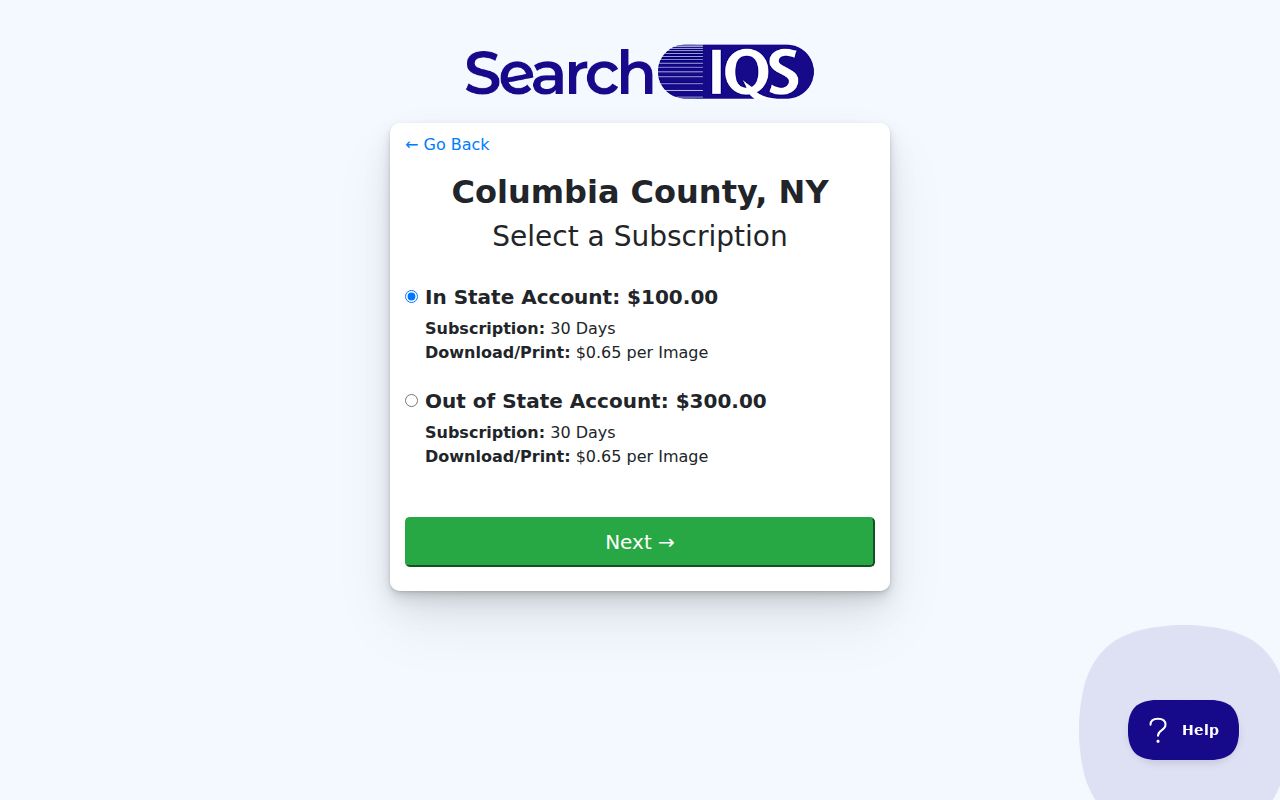
The page helps with budgeting access costs. It says nothing about the oldest indexed year.
Columbia County Clerk Recording Details
Recording an original instrument takes a self-addressed, postage-paid return envelope under a Clerk policy in effect since January 1, 2010. Chatham adds its own local transfer-tax form. That conveyance fee is five dollars, effective February 1, 2024.
These details concern recording mechanics only. They support no inference about title. The property fraud alert can watch up to three names. A same-name notice is just a prompt to pull the document and read it. The County Clerk page gives the office contact and the fraud-alert route.
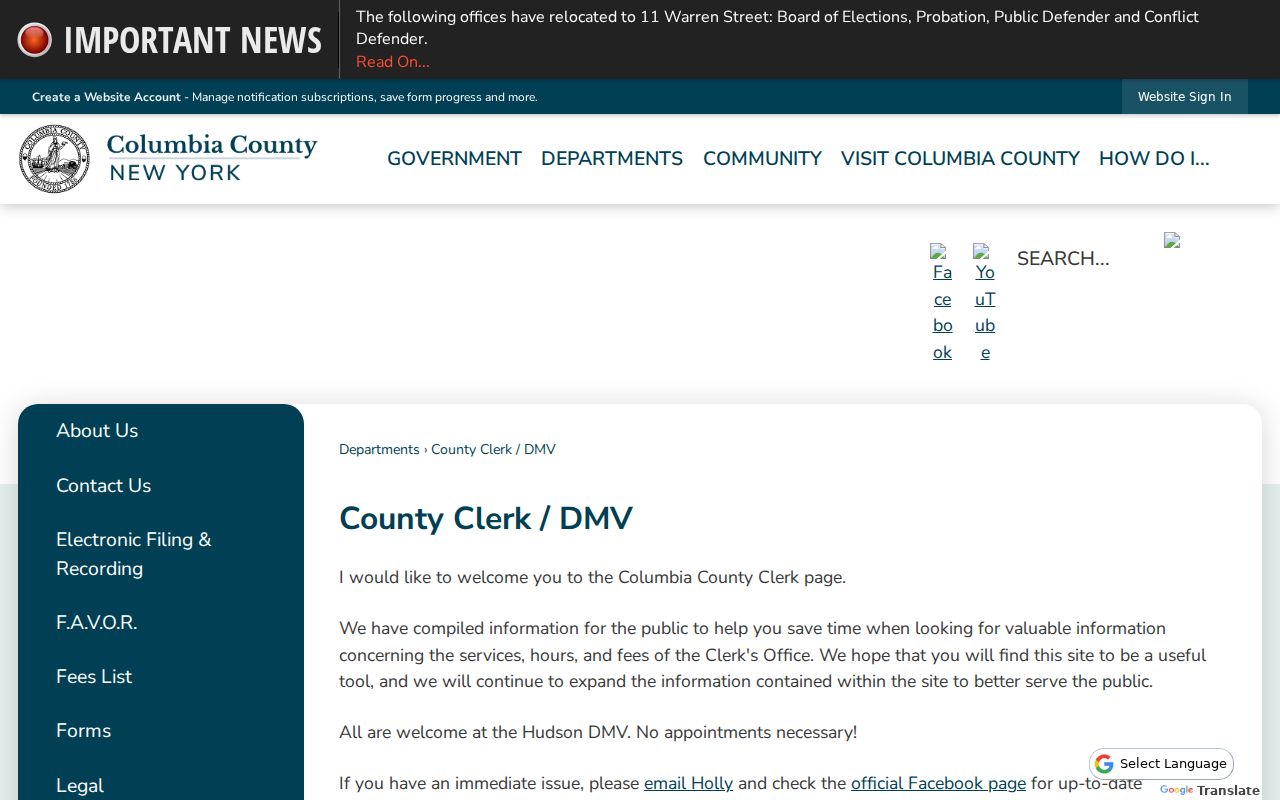
The page confirms the official office path for document requests or staff follow-up after an index result.
Older Columbia County Deeds and Book References
Do not assume an online cutoff the portal never disclosed. Take the earliest instrument you can verify to the Clerk's deed books. Try the index volumes, maps, or microfilm as well. Old descriptions name roads, farms, landings, creeks, and adjoining owners that take context to decode. The State Archives pathfinder and CCHS collections help with that context. The Clerk's recorded book still carries the chain evidence. The State Archives land-record pathfinder explains the older-record route.
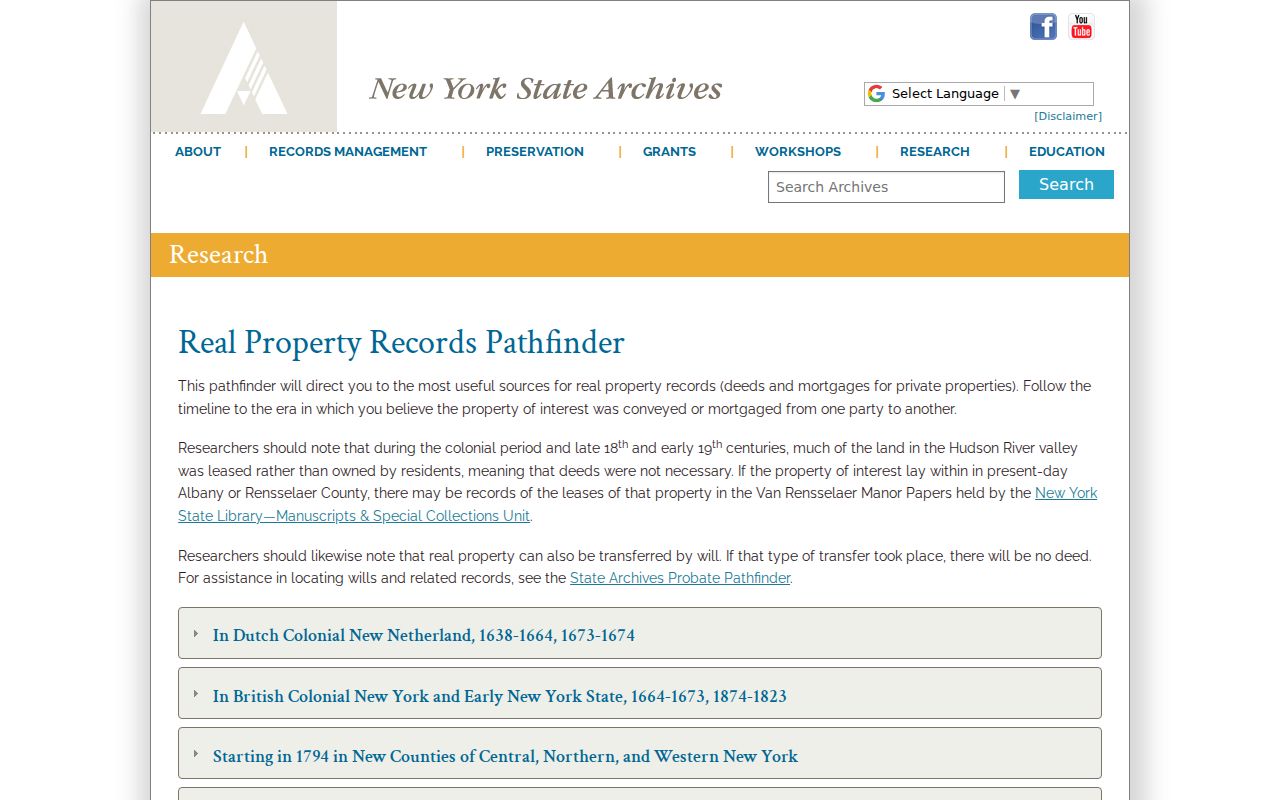
The pathfinder adds archival context while keeping county-recorded deeds at the center of a Columbia County property search.
Read Columbia County Deed Types by Their Function
An instrument label is a starting point, not a legal conclusion. A bargain-and-sale deed, warranty deed, quitclaim deed, executor deed, trustee deed, and referee deed each serve a different purpose. Each places different promises or authority in the record. Read the vesting clause in full. Check the parties, consideration language, legal description, signatures, acknowledgments, and recording stamp. A quitclaim conveys whatever interest the grantor holds. It makes no promise that the interest is complete. A referee deed usually traces back to a foreclosure case and judgment.
| Instrument | What to Extract | Companion Check |
|---|---|---|
| Ownership deed | Grantor, grantee, recording date, description | Prior deed and assessment SBL |
| Mortgage | Borrower, lender, amount, property reference | Later assignment or satisfaction |
| Easement | Benefited and burdened land, stated rights | Referenced map or deed |
| Executor or trustee deed | Fiduciary title and authority recital | Surrogate or trust authority |
| Referee deed | Case reference and court-directed conveyance | Judgment and foreclosure docket |
Use recorded names exactly as written. Keep suffixes, entity names, fiduciary roles, and spelling variants intact, because they drive the next grantor-grantee search in the deed records.
Follow a Columbia County Deed Chain Without Skipping Links
Start with the newest deed you have verified. Log its grantee, grantor, recording date, deed type, book and page or instrument reference, SBL if shown, and property description. The newest grantee becomes the search name for that party's acquiring deed. Work backward one transfer per row. Search both sides of the index. Spelling, initials, marriage, estates, and entity changes can hide a link in Columbia County property records.
- Confirm the parcel in PROS and copy its SBL and current deed clue.
- Search the current owner as grantee and identify the newest matching instrument.
- Read the legal description and prior-instrument reference before accepting the match.
- Move the grantor into the next backward search and retain spelling variants.
- Stop and document the gap when no verified link appears.
A chain holds only if the parcels match. A same-name deed elsewhere in Columbia County may concern different land. Check the town or city, subdivision, and lot. Then compare acreage, adjoining owners, and map references. The prior deed citation deserves the same care. A title company or attorney should render any legal title opinion. A research chain is an evidence log, not proof of ownership.
Mortgages, Liens, and Releases in Columbia County
Mortgages and liens belong in a full property history. They do not transfer ownership the way a deed does. Capture the parties, recording data, and the amount when shown. Include the property reference and any later release or satisfaction. An assignment can change a mortgage holder without touching the parcel owner of record. A satisfaction may sit in a separate index. Pair it with the obligation it closes out.
Judgments and lis pendens deserve the same care. A lis pendens signals pending litigation, not its outcome. Search eCourts or the appropriate clerk for the case. Then look for a recorded referee deed or other final conveyance. Tax foreclosure follows its own process and auction route. Do not collapse it into the first delinquency flag on the collection portal.
Record the sequence. Notice, complaint, judgment, sale, and recorded deed are separate events. Only the supporting records show which stages occurred.
Columbia County Maps and Legal Descriptions
A deed may describe land by metes and bounds. It may use a subdivision lot, filed map, prior deed, road, watercourse, or adjoining owner. Copy every map and book-page citation the description references. Then check the county GIS map for orientation only. The parcel polygon serves tax and planning work, not legal surveying.
For a subdivision parcel, get the filed plat or map held with County Clerk records. For a rural parcel, follow the calls and prior descriptions closely. Watch for road-name changes and old place terms. County mapping services sell paper tax maps, aerial products, and SHP data. None of that amends a deed. When location or acreage conflicts matter, hire a licensed surveyor.
Request Columbia County Deed Records Not Online
When a deed does not surface in the online database, the Clerk's land-record counter at 560 Warren Street in Hudson is the place to go. Bring specifics. Party names, an approximate year, and the municipality all narrow the hunt. A property description or SBL helps too. Any known book and page, and the type of instrument, narrow it further. Ask the staff whether the grantor-grantee index, a deed volume, a map, or microfilm requires searching in person. Some records simply live only at the counter. The online system publishes no stated cutoff year. So treat depth of coverage as an open question.
Older searches benefit from outside help. CCHS, municipal historians, the Hudson History Room, New York State Library newspapers, and the State Archives can translate an earlier address or place name into something usable. Whatever they uncover should point back to a recorded instrument in the Clerk's books. FOIL works for requesting an identifiable existing agency record. It cannot compel the Clerk to build a chain of title. Nor can it run open-ended historical research.